
Instant Asset Write Off: A Guide for Australian Small Businesses

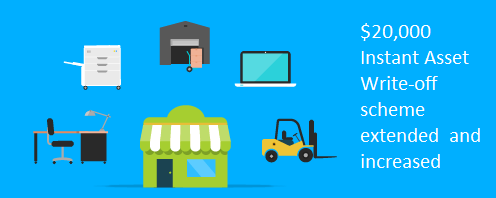
Instant asset write-off: a guide for Australian small businesses
The instant asset write-off can help eligible Australian small businesses claim a tax deduction for certain business assets sooner, rather than depreciating their cost over several years. It may improve cash flow, but it is not a cash grant or a discount on the purchase price—and the rules depend on the income year.
What is the instant asset write-off?
Under the small business depreciation rules, an eligible business may be able to deduct the business-use portion of an asset’s cost in the income year the asset is first used, or installed ready for use, if its cost is below the threshold that applies for that year.
The threshold and the dates for acquiring and using an asset can change. Check the Australian Taxation Office (ATO) guidance for the relevant income year before making a purchase or claiming a deduction.
Who may be eligible?
Generally, the write-off is part of the simplified depreciation rules for small businesses. Eligibility commonly depends on factors such as:
- the business’s aggregated turnover;
- whether it uses the simplified depreciation rules;
- the asset’s cost and business-use percentage; and
- when the asset is first used or installed ready for use.
Businesses connected with, or affiliated to, other entities may need to include their turnover when working out whether they meet the relevant turnover test. Some assets and businesses may be subject to special rules or exclusions.
How does the threshold work?
The threshold is generally applied to each asset, not to the total amount spent during the year. For example, if a business buys several separate eligible items, each item may be assessed individually. The rules can be different for assets that form part of a set or are purchased together as part of a larger whole.
Whether the asset’s cost includes GST depends on the business’s GST position. A business entitled to claim a GST credit will generally work out the asset’s cost excluding that credit. If it cannot claim a GST credit, the GST may form part of the asset’s cost.
Which assets might qualify?
Depending on the rules for the relevant year, eligible assets may include items such as tools, computers, office equipment, machinery or a work vehicle. The asset must generally be used for business purposes, and only the business-use share of the cost can be claimed.
Some assets are treated differently or may not qualify. Examples can include certain buildings, assets used mainly to earn rent, and assets subject to specific depreciation rules. Check the ATO’s current guidance for the asset type you are considering.
What if an asset costs more than the threshold?
An asset that exceeds the applicable threshold generally cannot be written off in full under this measure. If the business uses the simplified depreciation rules, it may instead be added to the small business depreciation pool and depreciated under the pool rules. Other depreciation methods may apply depending on the business’s circumstances.
A deduction is not a dollar-for-dollar saving
A write-off reduces the business’s taxable income; it does not reimburse the purchase price. The tax benefit depends on factors including the business’s taxable income, tax rate and eligibility. A business should consider whether an asset makes commercial sense—not buy something solely to claim a deduction.
Before you claim
- Confirm the threshold and eligibility rules for the correct income year.
- Check that the asset is used, or installed ready for use, by the relevant deadline.
- Keep invoices, payment records and evidence of when the asset was ready for use.
- Record the business and private-use proportions where an asset has mixed use.
- Check how GST credits affect the asset’s cost for tax purposes.
Tax rules can change, and individual circumstances matter. Use the ATO’s current information or speak with a registered tax agent before relying on the instant asset write-off for a major purchase.
5 Tips for Claiming the Instant Asset Write-Off
- Check the ATO’s current eligibility rules and write-off threshold.
- Confirm your business meets the small-business requirements.
- Use the asset mainly for business; private use may reduce the deduction.
- Claim it in the year it’s first used or installed ready for use.
- Keep invoices and records showing the asset’s cost and business use.
Check the ATO’s current eligibility rules and write-off threshold.
Before claiming the instant asset write-off, check the ATO’s current eligibility rules and threshold for the relevant income year. The limits and conditions can change, and eligibility may depend on your business’s turnover, the asset’s cost and when it is first used or installed ready for use.
Confirm your business meets the small-business requirements.
Before claiming the instant asset write-off, confirm your business meets the small-business eligibility requirements for the relevant income year. These may include turnover limits and using the simplified depreciation rules, and connected or affiliated businesses may need to be included when calculating turnover. Check the ATO’s current guidance or speak with a registered tax agent, as eligibility rules can change.
Use the asset mainly for business; private use may reduce the deduction.
To claim the instant asset write-off, the asset must be used for your business, and you can generally only claim the business-use portion of its cost. If you also use it privately—for example, a work vehicle used for personal trips—keep records to support a fair business-use estimate. A higher private-use share may reduce the deduction, so check the ATO’s guidance or speak with a registered tax agent about your circumstances.
Claim it in the year it’s first used or installed ready for use.
To claim the instant asset write-off, the asset generally needs to be first used, or installed and ready for use, in the income year you’re claiming it for. Buying it before the end of the financial year isn’t enough if it won’t be ready to use until later. Keep records showing when the asset was put into service, and check the ATO’s rules for the relevant year, as eligibility and deadlines can vary.
Keep invoices and records showing the asset’s cost and business use.
Keep the invoice and any supporting records for an asset you claim under the instant asset write-off. These should show what it cost, when it was bought and when it was first used or installed ready for use. If the asset is also used privately, keep clear records of its business-use percentage so you can claim only the eligible portion.
Instant asset write-off: a guide for Australian small businesses The instant asset write-off can help eligible Australian small businesses claim a tax deduction for certain business assets sooner, rather than depreciating their cost over several years. It may improve cash flow, but it is not a cash grant or a discount on the purchase price—and…