
Pierre Bonnard: The Painter Who Found Beauty in Everyday Life

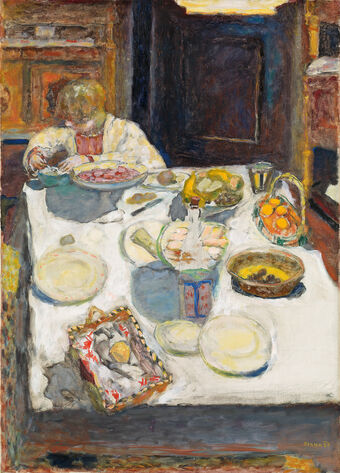
Pierre Bonnard (1867–1947) transformed familiar subjects—an open window, a bowl of fruit, a sunlit garden or a figure in a bath—into vivid explorations of colour and memory. A leading French painter of the late 19th and early 20th centuries, he is celebrated for turning the details of daily life into scenes of remarkable warmth and visual complexity.
From law to art
Bonnard was born in Fontenay-aux-Roses, near Paris. At his father’s urging, he studied law and briefly worked in a government office. Art, however, soon became his main pursuit. He attended the Académie Julian and the École des Beaux-Arts, where he met other young artists who would go on to form the group known as Les Nabis.
Inspired by Paul Gauguin and by the decorative qualities of Japanese prints, the Nabis sought to move beyond naturalistic representation. They treated a painting as an arrangement of colours, shapes and patterns, rather than simply a window onto the world. Bonnard’s interest in Japanese art earned him the nickname “le Nabi très japonard”—a playful reference to his enthusiasm for its flattened spaces and bold decorative designs.
A distinctive approach to colour
Bonnard’s paintings are often recognised by their rich, sometimes unexpected colours. A room might glow with orange and pink; a garden might shimmer with greens, blues and golds. Instead of relying on precise outlines or conventional perspective, he built scenes from patches of colour and shifting patterns.
This approach gives his work a sense of intimacy, but it can also make the scene feel dreamlike. A table, doorway or mirror may seem to tilt or merge with its surroundings. Rather than presenting a place as a fixed, objective view, Bonnard conveys the sensation of seeing it—how light falls, how colour changes and how a familiar moment lingers in the mind.
Home, gardens and memory
Domestic life was central to Bonnard’s art. His paintings frequently show interiors, meals, windows and gardens, often featuring his wife, Marthe de Méligny. In works such as The Dining Room in the Country and The Open Window, everyday settings become intricate compositions in which indoor and outdoor spaces seem to flow into one another.
Bonnard did not always paint directly from the scene in front of him. He made notes and sketches, and sometimes used photographs to help record details. He often completed paintings later in his studio, working from memory and revisiting his impressions over time. As a result, his pictures are not straightforward records of a single moment. They are carefully reimagined scenes, shaped by recollection and artistic choice.
Why Bonnard still matters
Bonnard’s work can feel quiet at first glance, yet it rewards close attention. Patterns overlap, colours subtly shift and small details draw the eye through a room or landscape. His art suggests that ordinary experiences—the changing light in a house, a shared meal or a view through a window—can hold lasting beauty.
Today, Bonnard is regarded as one of the great colourists of modern art. His paintings connect the decorative experimentation of Les Nabis with the more personal, expressive art that developed in the 20th century. By painting everyday life through the filter of memory, he created images that are both familiar and wonderfully elusive.
Pierre Bonnard: 9 Tips for Exploring His Life and Art
- Pierre Bonnard was a French painter associated with the Post-Impressionists.
- He was a founding member of the artist group Les Nabis.
- Look for his rich, glowing colours and patterned surfaces.
- Many of his paintings show domestic interiors and everyday life.
- Bonnard often painted his wife, Marthe, in their home.
- He used memory and sketches to shape scenes in the studio.
- Notice how windows and mirrors create layered views.
- His compositions can feel cropped, like candid snapshots.
- Take time to explore the small details in his paintings.
Pierre Bonnard was a French painter associated with the Post-Impressionists.
Pierre Bonnard was a French painter associated with the Post-Impressionists, known for transforming everyday scenes into richly coloured, atmospheric works. Although influenced by Impressionism, he developed a distinctive style that emphasised pattern, memory and the shifting effects of light. His paintings often depict domestic interiors, gardens and intimate moments, showing how ordinary subjects can become vivid and expressive.
He was a founding member of the artist group Les Nabis.
Pierre Bonnard was a founding member of Les Nabis, a group of young French artists active in the late 19th century. Inspired by Paul Gauguin and the decorative qualities of Japanese prints, the Nabis believed paintings could express ideas and emotions through colour, pattern and shape, rather than simply imitate reality. These principles helped shape Bonnard’s distinctive approach to painting.
Look for his rich, glowing colours and patterned surfaces.
When looking at a Pierre Bonnard painting, notice how rich, glowing colours bring familiar scenes to life. Warm reds, yellows and pinks mingle with cool blues and greens, while patterned walls, furnishings and gardens add layers of visual interest. These colours and surfaces can make a simple room or everyday moment feel vibrant, intimate and almost dreamlike.
Many of his paintings show domestic interiors and everyday life.
Many of Pierre Bonnard’s paintings focus on domestic interiors and the small moments of everyday life. Rooms, meals, windows and gardens become rich, colourful scenes, often featuring his wife, Marthe. Rather than simply recording what he saw, Bonnard transformed familiar surroundings through shifting light, decorative patterns and memory, revealing the beauty in ordinary moments.
Bonnard often painted his wife, Marthe, in their home.
Bonnard often painted his wife, Marthe, in the couple’s home, making domestic life a central subject of his art. She appears in intimate scenes of bathing, dressing and relaxing, surrounded by the colourful interiors and shifting light that Bonnard loved to capture. Rather than simply recording these moments as they happened, he often reworked them from memory, turning familiar home life into richly patterned, dreamlike compositions.
He used memory and sketches to shape scenes in the studio.
Pierre Bonnard often used memory and quick sketches to shape his scenes back in the studio. Rather than simply copying what was in front of him, he reworked colours, details and compositions to capture the feeling of a place or moment. This gave his paintings their distinctive, dreamlike quality, as familiar interiors and gardens seem both observed and remembered.
Notice how windows and mirrors create layered views.
Notice how windows and mirrors create layered views in Pierre Bonnard’s paintings. They draw the eye between indoors and outdoors, reflection and reality, making rooms feel open, intimate and full of shifting light. Look closely and you may spot details that seem to overlap or appear in unexpected places—Bonnard uses these visual layers to capture not just a scene, but the feeling of experiencing it.
His compositions can feel cropped, like candid snapshots.
Bonnard’s compositions can feel cropped, as though they capture a candid snapshot of everyday life. Figures and objects are sometimes cut off by the edge of the canvas, while unusual viewpoints make a room or garden seem observed in passing. This gives his scenes an informal, intimate quality, as if the viewer has just glanced into a private moment.
Take time to explore the small details in his paintings.
Take time to explore the small details in Pierre Bonnard’s paintings. A patch of colour, a patterned tablecloth or a glimpse through a window can reveal how carefully he balanced each scene. Let your eyes wander across the canvas and notice how light, shape and colour work together to turn ordinary moments into something vivid and memorable.
Pierre Bonnard: The Painter of Everyday Light Pierre Bonnard (1867–1947) transformed familiar subjects—an open window, a bowl of fruit, a sunlit garden or a figure in a bath—into vivid explorations of colour and memory. A leading French painter of the late 19th and early 20th centuries, he is celebrated for turning the details of daily…