
Exploring the Wonders of the Universe

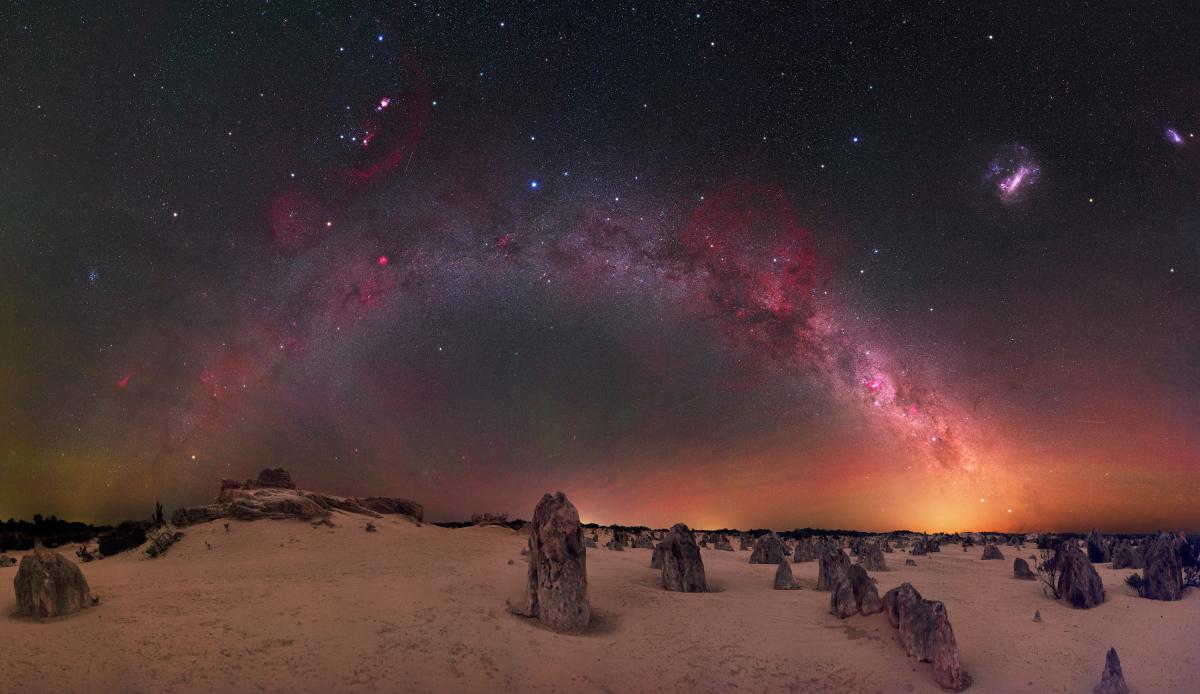
Astronomy: Exploring the Universe
Astronomy is the scientific study of objects and events beyond Earth’s atmosphere. It explores everything from nearby planets and moons to distant stars, galaxies and the vast structure of the universe. By observing the light and other signals that reach us from space, astronomers investigate how the cosmos works—and how it has changed over time.
What astronomers study
The universe contains an enormous variety of objects. Our solar system includes the Sun, eight planets, dwarf planets, moons, asteroids and comets. Beyond it are stars, often grouped into galaxies, as well as nebulae: vast clouds of gas and dust where stars can form or leave material behind as they evolve.
Astronomers also study phenomena that cannot be understood through ordinary visible light alone. Radio waves, infrared radiation, X-rays and gamma rays each reveal different aspects of the universe. By combining observations across the electromagnetic spectrum, researchers can build a more complete picture of distant objects and energetic events.
Looking back in time
Light takes time to travel, so looking into space also means looking into the past. Sunlight takes about eight minutes to reach Earth. Light from more distant stars may travel for years, centuries or much longer before it arrives at a telescope. Some galaxies are so far away that their light began its journey billions of years ago.
This makes astronomy a kind of cosmic history. By studying ancient light, scientists can learn how galaxies formed and how the universe has developed. Measurements of the expanding universe also help researchers investigate its age, composition and possible future.
How we explore the sky
Telescopes collect and analyse light that is too faint for the human eye to detect. Some operate on the ground, while others are placed in space to observe wavelengths that Earth’s atmosphere blocks or distorts. Modern instruments can also detect radio signals and other forms of energy, while observatories work with spacecraft to study planets and other objects up close.
Australia plays an important role in astronomy. Facilities such as the Australia Telescope Compact Array near Narrabri and the ASKAP radio telescope in Western Australia help researchers study the radio universe. Australia’s dark skies and southern location also offer excellent views of parts of the sky that are difficult to see from northern latitudes, including the Magellanic Clouds and the centre of the Milky Way.
Indigenous knowledge of the night sky
For Aboriginal and Torres Strait Islander peoples, the sky holds deep cultural significance. Across Australia, First Nations communities have developed distinct bodies of knowledge connected to stars, constellations, seasons, navigation, stories and law. These traditions are diverse and belong to particular communities; they are not a single, uniform system.
Recognising Indigenous knowledge alongside modern scientific astronomy offers a richer understanding of how people observe and interpret the sky. It also highlights the long history of careful observation and knowledge-sharing on the continent.
Amateur astronomy
You don’t need a professional telescope to start exploring the night sky. From a dark location, the unaided eye can reveal constellations, planets, the Milky Way and occasional meteor showers. Binoculars can bring the Moon’s craters and star clusters into clearer view. A star chart or astronomy app can help identify what is visible, though taking time to let your eyes adjust to the darkness makes a big difference.
Astronomy invites curiosity on every scale—from the changing phases of the Moon to the evolution of distant galaxies. Each observation adds to our understanding of the universe and our place within it.
8 Top Tips for Stargazing
- Use a star chart to identify constellations.
- Choose a dark spot away from city lights.
- Let your eyes adjust for 20 minutes.
- Check the weather before stargazing.
- Use binoculars to explore the Moon.
- Never look directly at the Sun.
- Watch meteor showers after midnight.
- Keep a notebook of your observations.
Use a star chart to identify constellations.
Use a star chart to identify constellations and make sense of the night sky. Choose one suited to your location and the current season, then match its patterns to the stars above. Start with bright, easy-to-spot constellations and use them as guides to find others. A printed chart works well under dark skies, while a phone app can help you check what’s visible—just dim your screen to preserve your night vision.
Choose a dark spot away from city lights.
Choose a dark spot away from city lights to make the most of stargazing. Streetlights, buildings and other sources of artificial light can wash out faint stars and celestial objects, so head somewhere darker and give your eyes about 20–30 minutes to adjust. Check local access and weather conditions, and bring a warm layer so you can enjoy the night sky comfortably.
Let your eyes adjust for 20 minutes.
When you arrive at a dark-sky spot, give your eyes about 20 minutes to adjust before observing. Bright light temporarily reduces your night vision, so avoid looking at your phone or a torch; if you need light, use a dim red torch. As your eyes adapt, faint stars and other details become easier to see.
Check the weather before stargazing.
Check the weather before heading out to stargaze, as cloud cover, rain, haze and strong winds can make observing difficult or uncomfortable. A clear forecast gives you the best chance of seeing the stars, while checking for dew or frost can help you dress appropriately and protect your telescope or binoculars.
Use binoculars to explore the Moon.
Binoculars are a simple way to explore the Moon in more detail. Choose a steady spot and, if possible, rest your elbows on a solid surface to reduce shaking. The Moon’s craters and mountain ranges are often easiest to see near the line between light and shadow, known as the terminator, where the low-angle sunlight brings out their texture. A crescent or quarter Moon can reveal striking detail, so you don’t need to wait for a full Moon to start looking.
Never look directly at the Sun.
Never look directly at the Sun—not even for a moment, through sunglasses, binoculars or a telescope. Its intense light can cause serious, permanent damage to your eyes without warning. To observe the Sun safely, use equipment fitted with a certified solar filter designed for the specific instrument, or watch a projection made using an approved method. Never look through an unfiltered telescope or binoculars, even if solar glasses are being worn.
Watch meteor showers after midnight.
For the best chance of spotting a meteor shower, try watching after midnight, when your part of Earth is facing more directly into the stream of space dust and the shower’s radiant is often higher in the sky. Find a dark spot away from streetlights, give your eyes about 20 minutes to adjust, and look across a wide area of sky rather than staring at the radiant. Check the shower’s peak time and the Moon’s phase, too, as both can affect how many meteors you’ll see.
Keep a notebook of your observations.
Keep a notebook of your observations to track what you see in the night sky and how it changes over time. Note the date, time, location, weather and equipment you used, along with details such as the Moon’s phase or a planet’s position. Sketches and quick impressions are useful too—even simple notes can help you recognise patterns, plan future viewing sessions and appreciate how your astronomy skills grow.
Astronomy: Exploring the Universe Astronomy is the scientific study of objects and events beyond Earth’s atmosphere. It explores everything from nearby planets and moons to distant stars, galaxies and the vast structure of the universe. By observing the light and other signals that reach us from space, astronomers investigate how the cosmos works—and how it…